

De-risking Told: The Path to a Premium Paid Plan
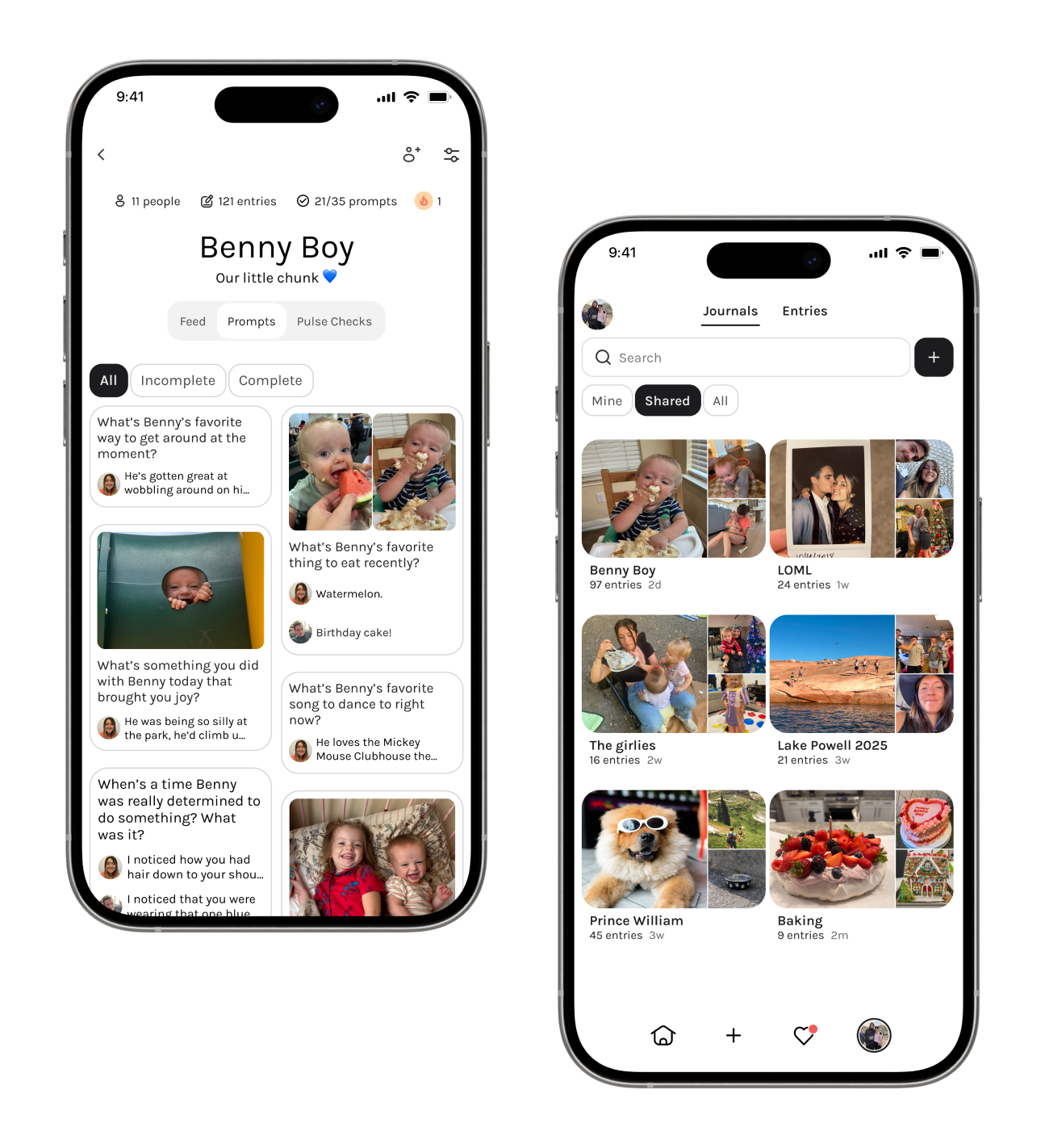
Told is a shared journaling platform designed to turn fleeting moments into lasting digital legacies. Having achieved strong initial retention, the next strategic milestone was transitioning from a free MVP to a sustainable, paid product. Rather than building a standard "feature list," I acted as both Designer and PM to identify the highest-leverage monetization path while ruthlessly eliminating features that didn't drive business outcomes.
MY ROLE
Design
Product Manager
Desired Business Outcomes
Business Outcomes for Growth
Revenue
Converting the existing and new user base into "Told Plus" subscribers at a premium price point ($60-$79/yr).
Growth
Increase the user base while keeping CAC as small as possible - little to no budget to spend on this.
Retention
Strive for core features that become a standard part of how people create and share personal content.
Desired User Outcomes
User Outcomes That Earn Subscribers

Primary User
Mom
Goal: Wants an easy, low effort way to document her children's milestones and share them with family.

Primary User
Couples
Goal: Wants to grow their relationship, document their love story.

Secondary User
Influencer/Expert
Goal: Monetize their expertise and engage/grow their community.
My Hypotheses
Combining it all into Hypotheses
I believe [desired user outcome] + [my solution] = [desired business outcome].
Hypothesis 1
If Moms can easily maintain a robust digital journal, while simultaneously sharing it with their family using Told+ premium journal prompts they will subscribe to Told+ for $40-60/yr.
Hypothesis 2
If Couples can achieve deeper connection, strengthen their relationship, and have a cute digital documentation of their relationship through Told+ premium journal prompts they will subscribe to Told+ for $50-80/yr.
Hypothesis 3
If Influencers/Experts can easily make money and engage and build their communities by creating one off purchasable Told prompt packs, they will partner with Told and drive high volume user growth at very little cost to us.
Hypothesis 4
If a photo book printing company(eg Chatbooks) can increase print sales via an integration with Told, we can generate a sustainable affiliate revenue stream.
Hypothesis Mapping and Prioritization
Risk vs Feasibility
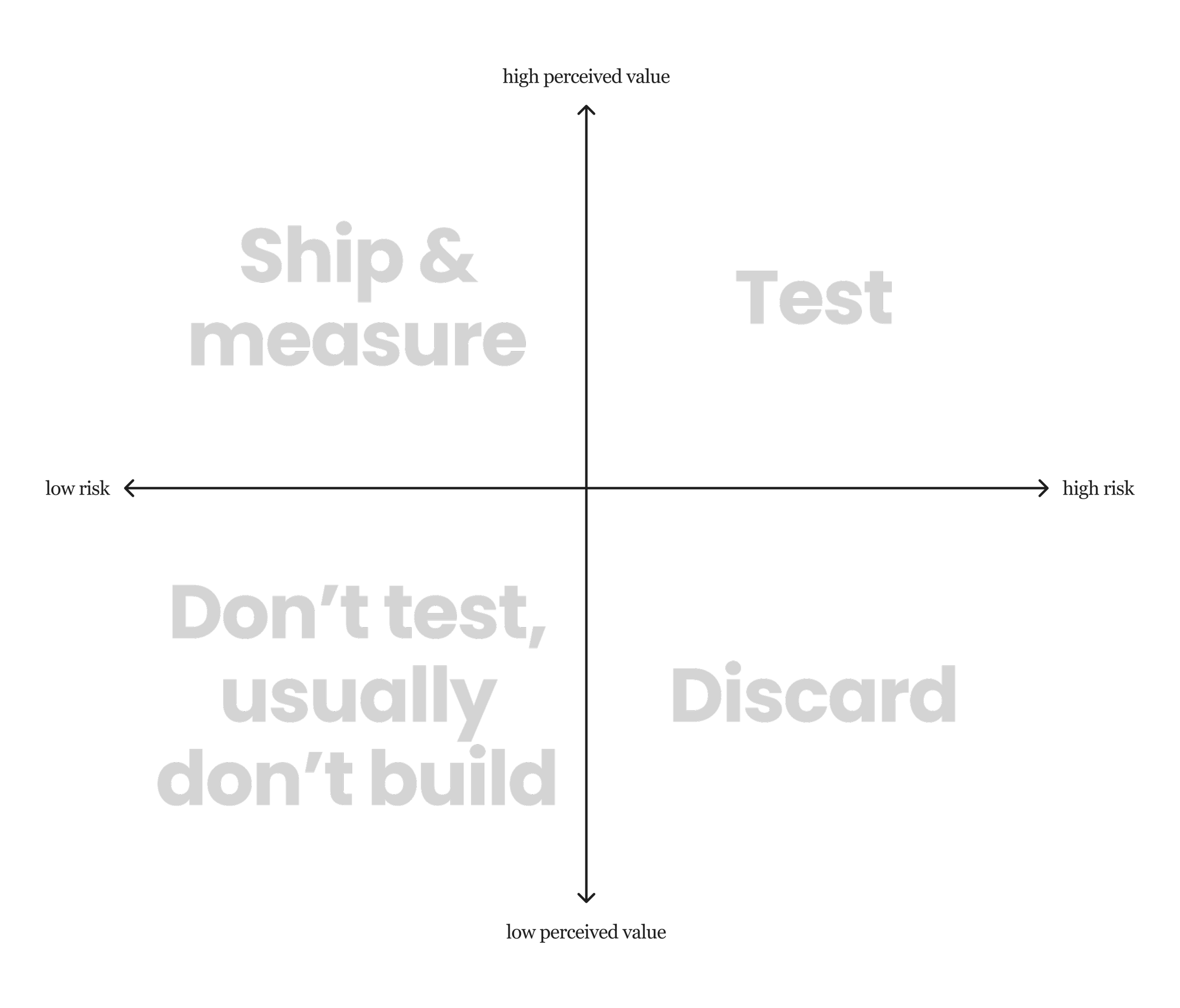
I used the Lean UX matrix to balance immediate growth with long-term leverage. There were many foundational improvements, like replying to comments, notifications, and video performance were moved to "Ship & Measure" as low-risk wins. I deprioritized Influencer Packs and Chatbooks integrations to the "Discard" quadrant for now; while high-value, they aren't feasible until we build the market leverage of a larger user base. This allowed me to focus all innovation capital on the Journal Prompt Plan—our highest-risk, highest-reward "Test" hypothesis that ultimately validated our path to a premium paid model.
What did I need to learn next
Identifying the riskiest assumption & the least amount of work to validate it
Before getting too far into design and development, I needed to make sure I wasn’t hinging my work on an assumption that had no validation. And in this case, there was one pretty big one.
My Riskiest Assumption
Moms and Couples are willing to pay $40-80/yr for guided Told+ journals.
The least amount of work required to learn the next most important thing
Run a $100 ad test on meta measuring Landing Page Views (LPVs) to test interest and price sensitivity.
Interview target personas to gauge interest in new features and price points.
The ad test
Quantitative Validation
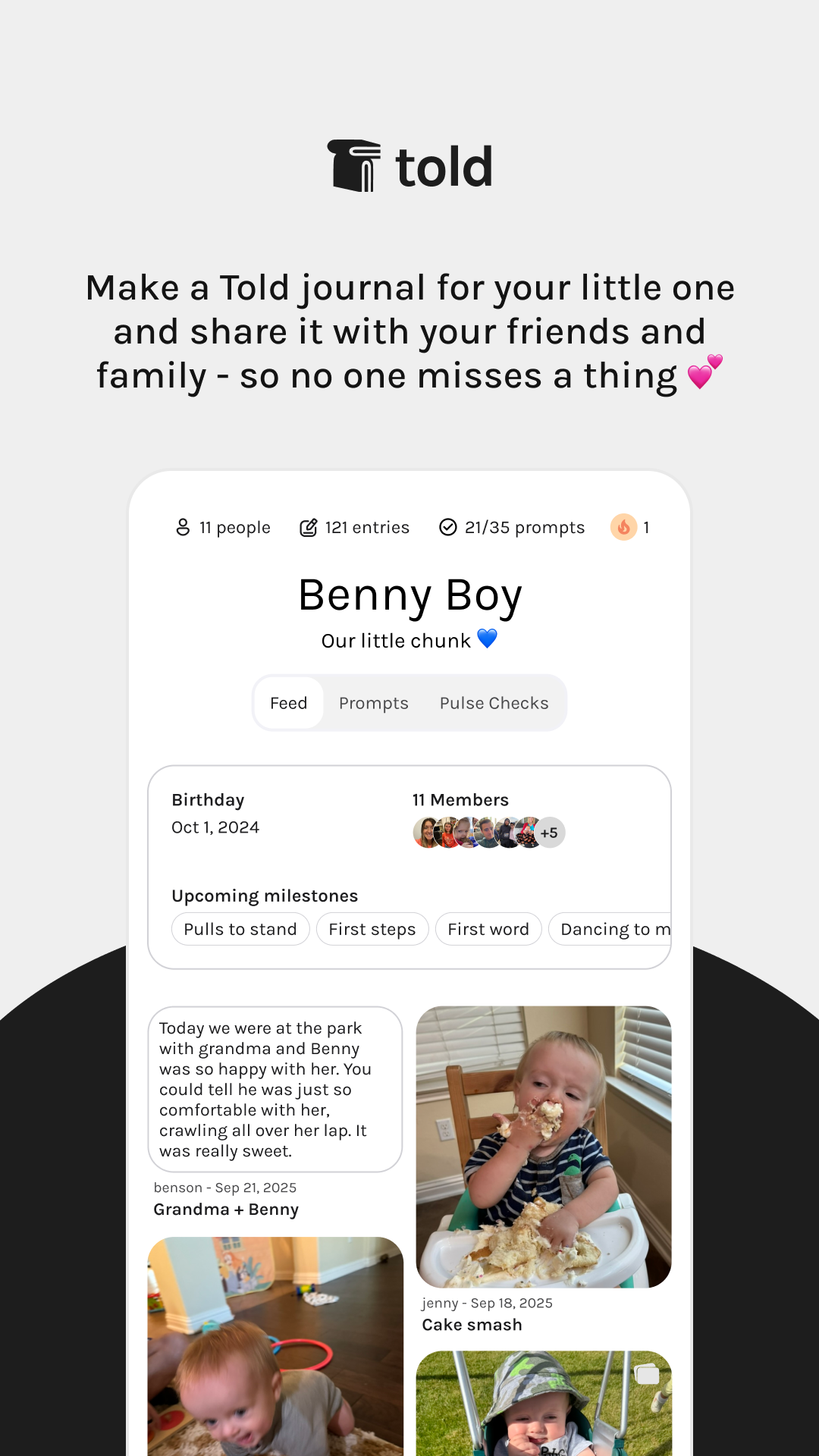
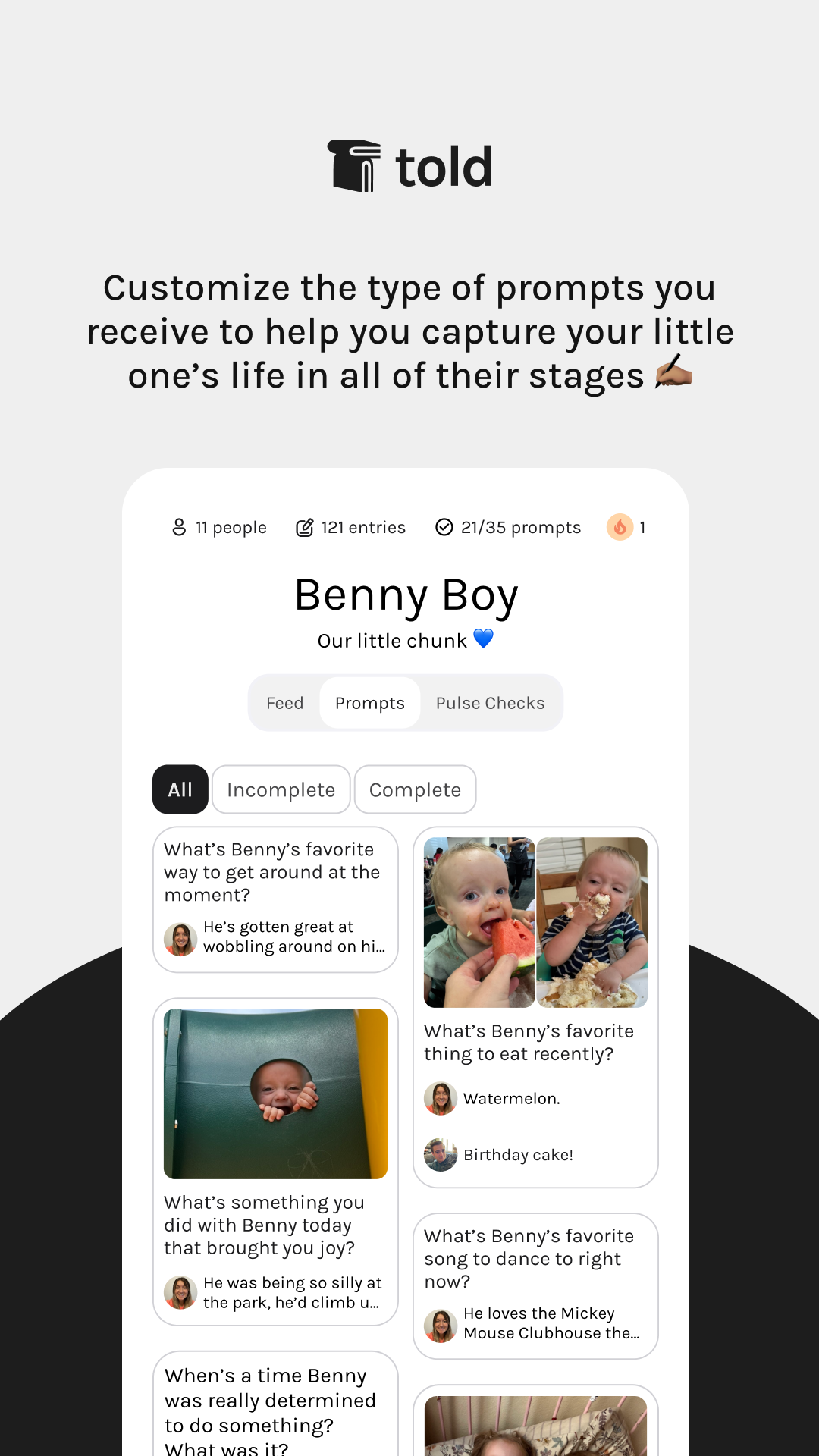
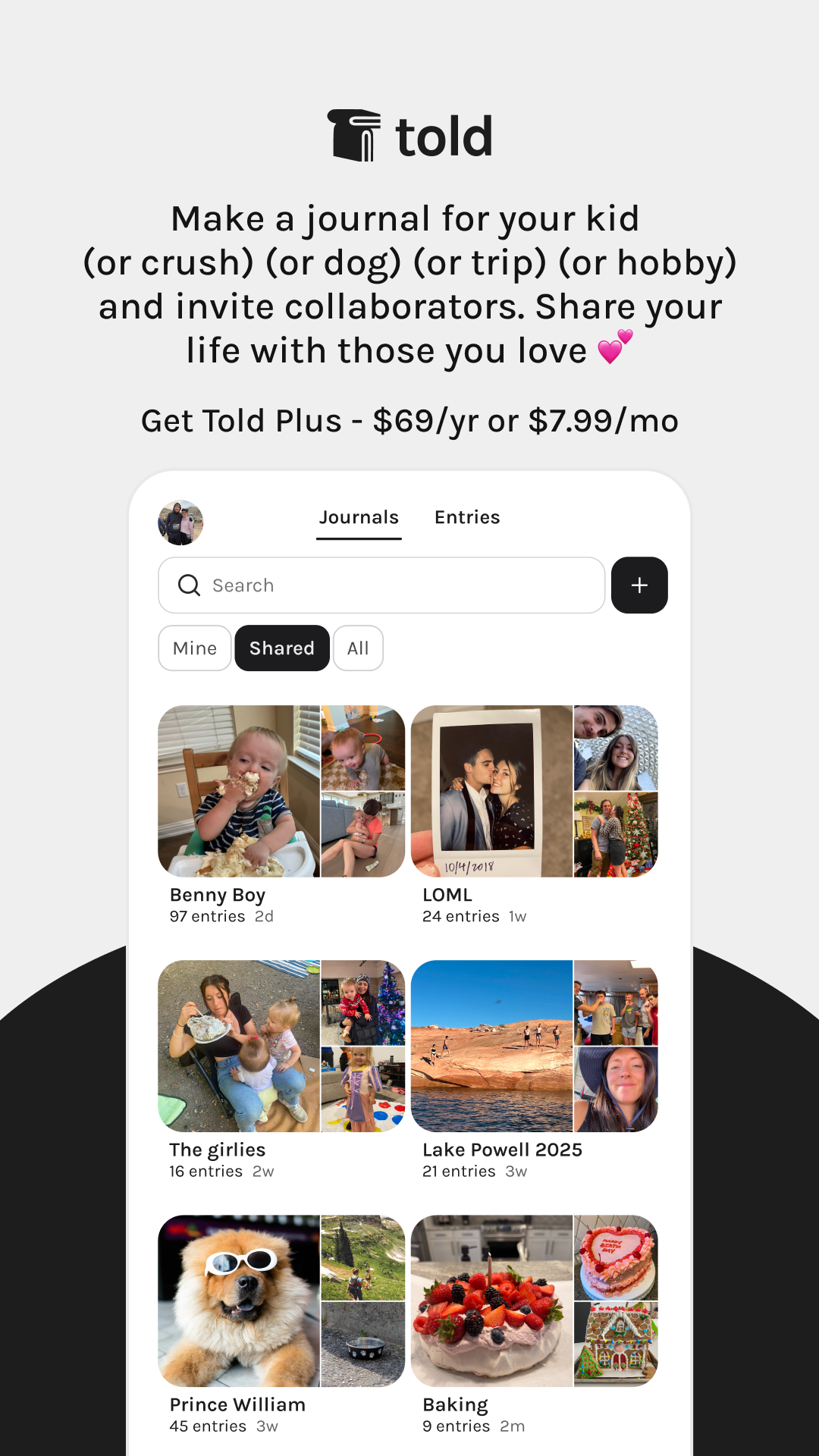
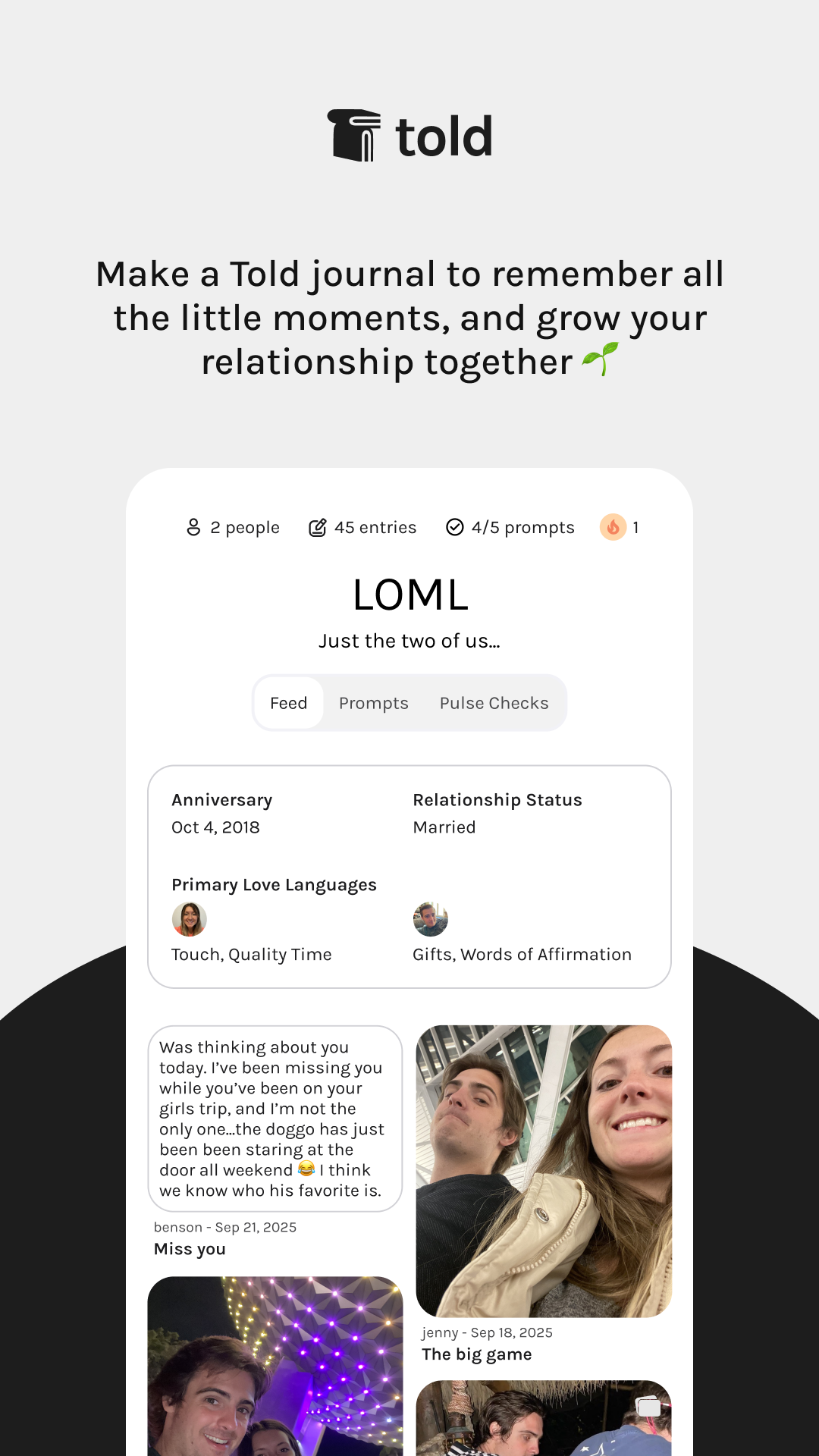
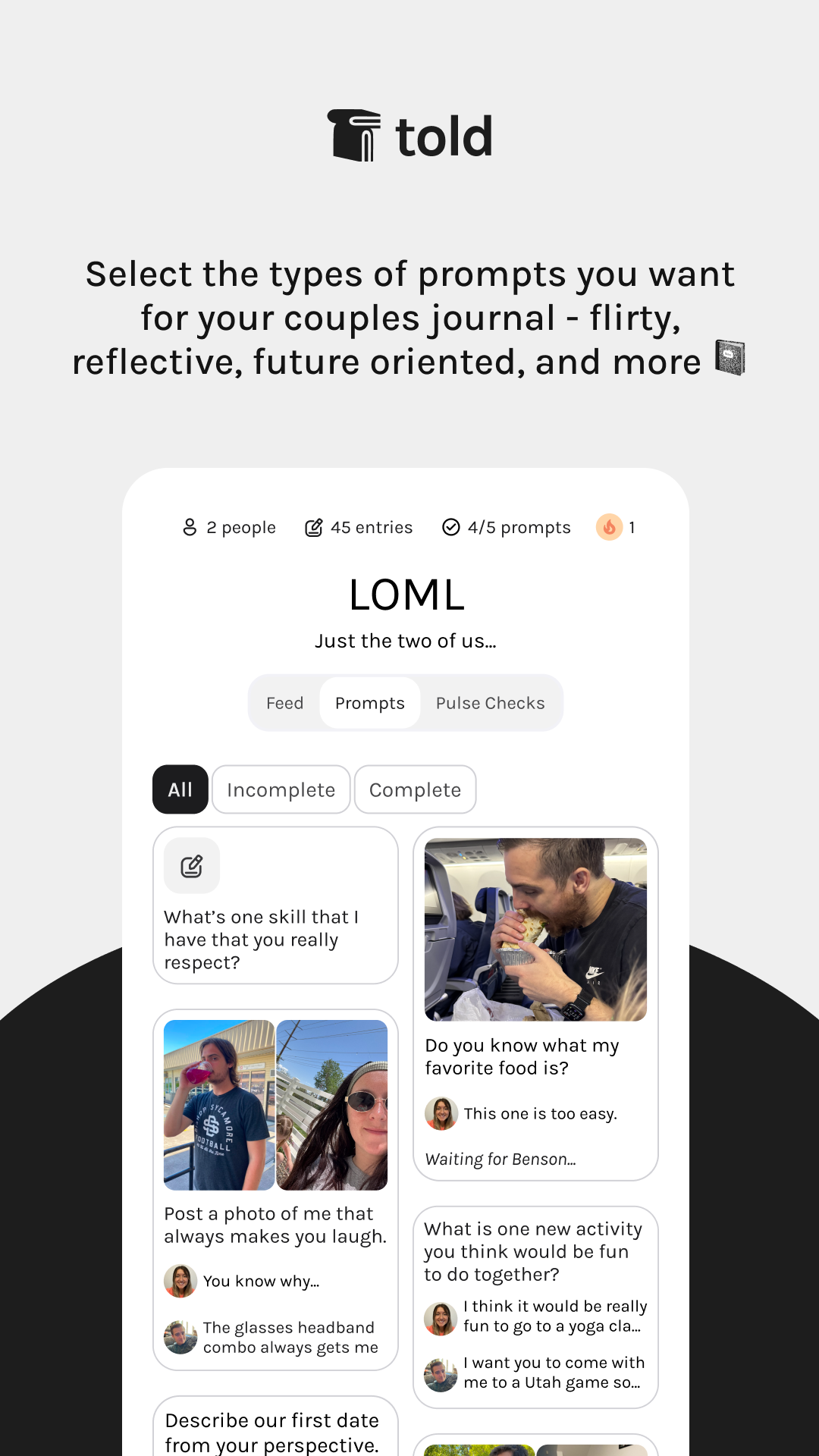
I ran three ads with multiple versions: a targeted couples ad with $49/yr and $79/yr, a targeted moms ad with a $29/yr and $69/yr, and a general ad with no specified audience or price point.
Targeting moms
Targeting couples
Meta ai find best fit audience
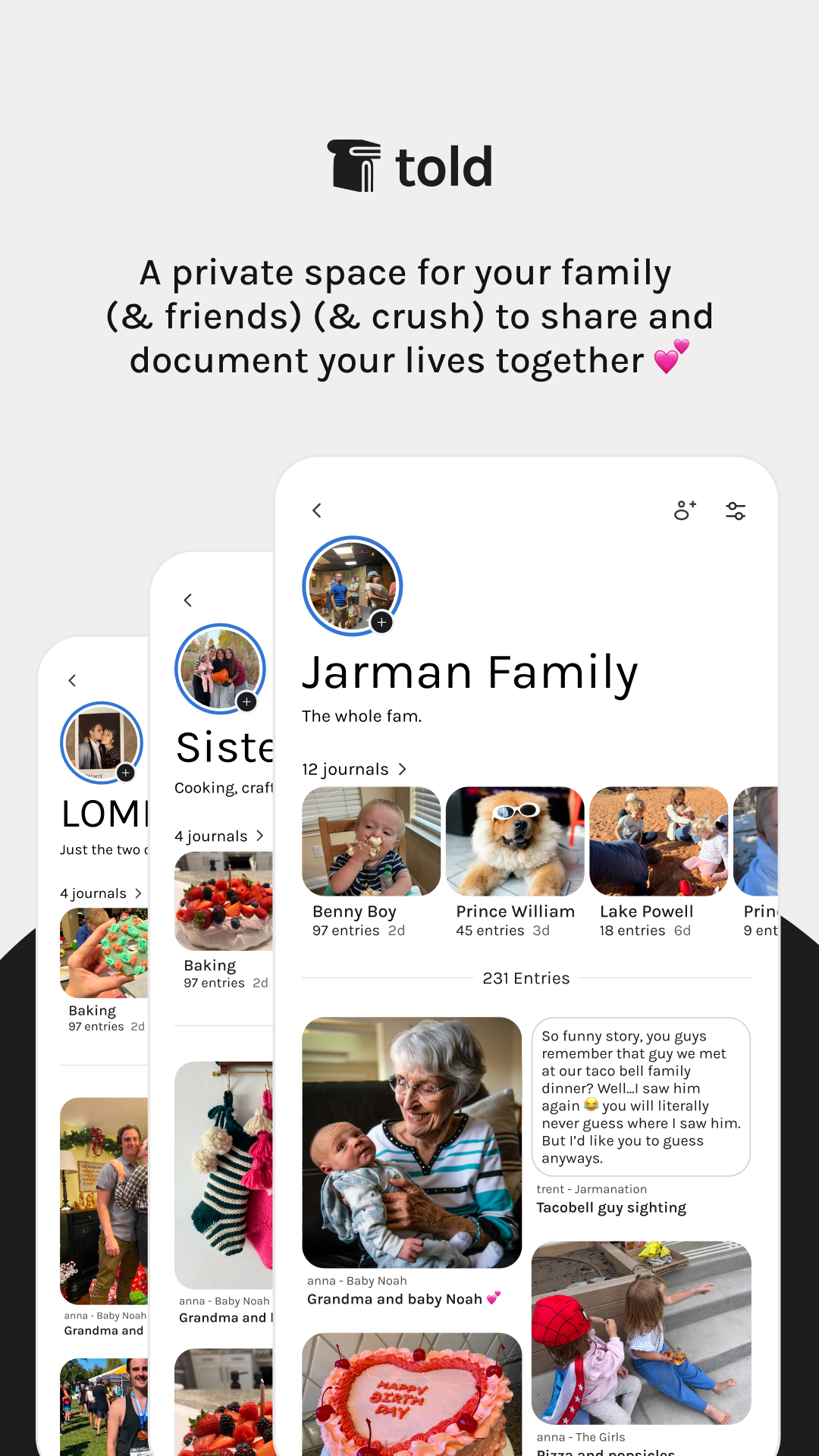
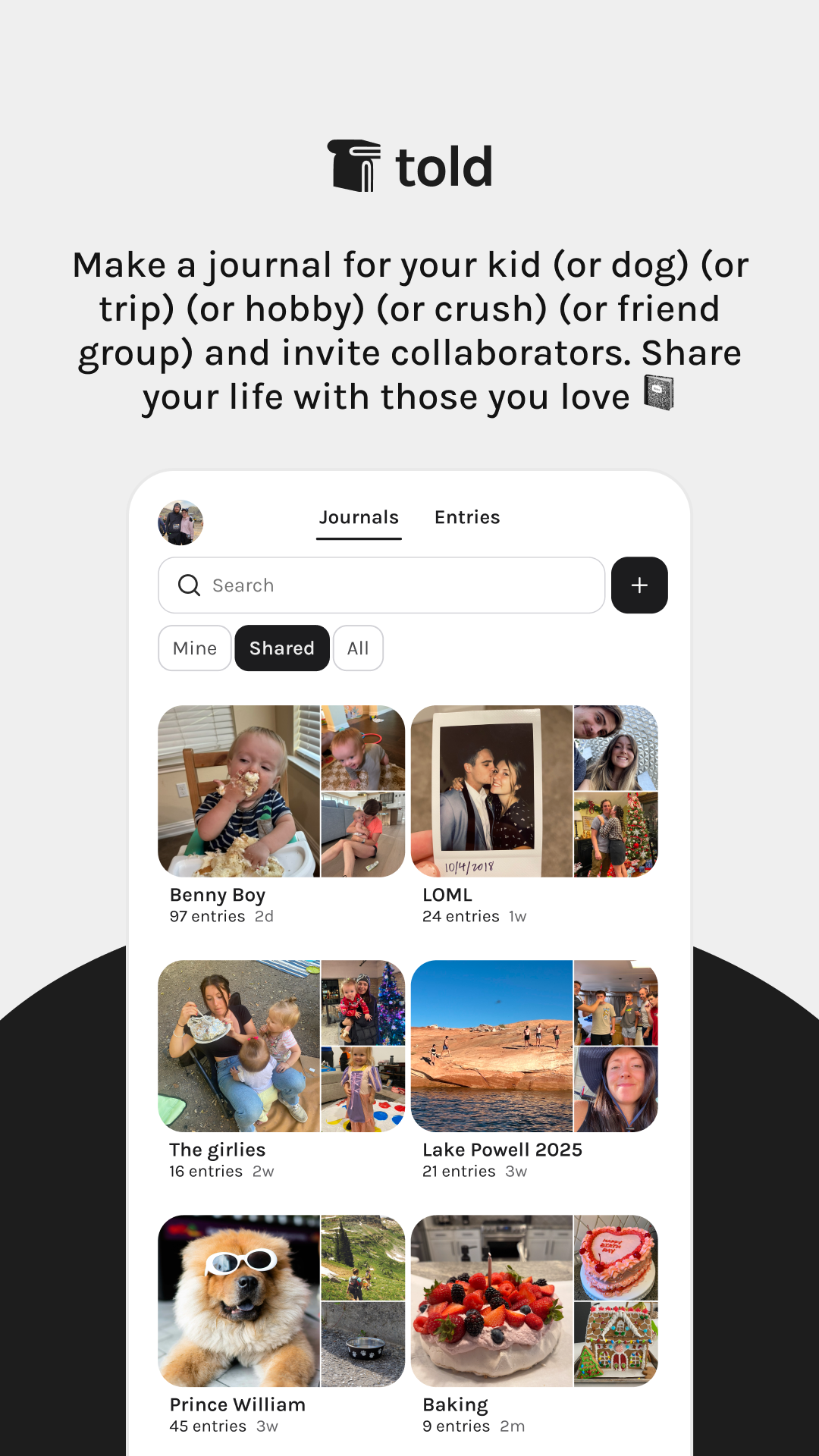
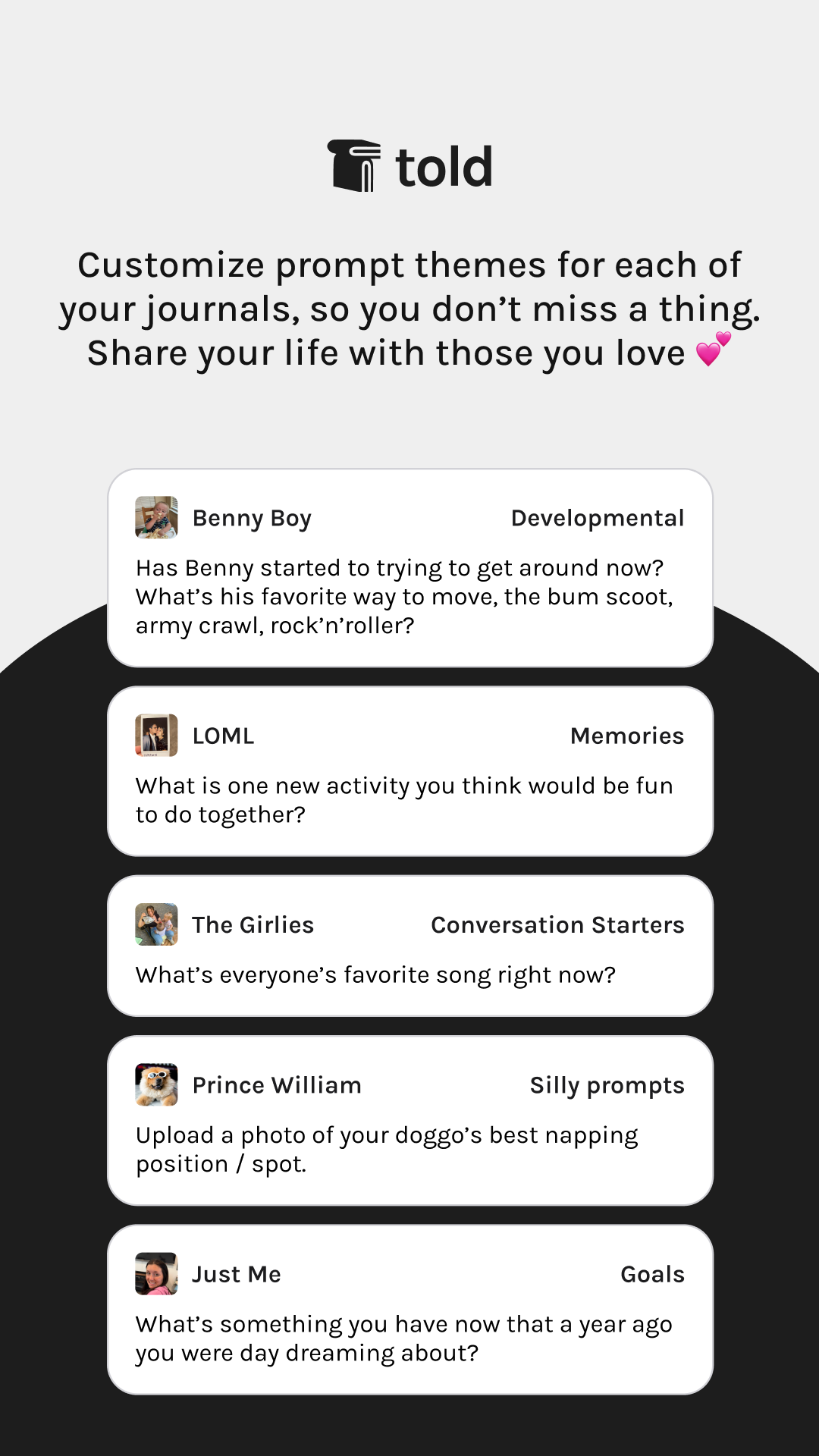
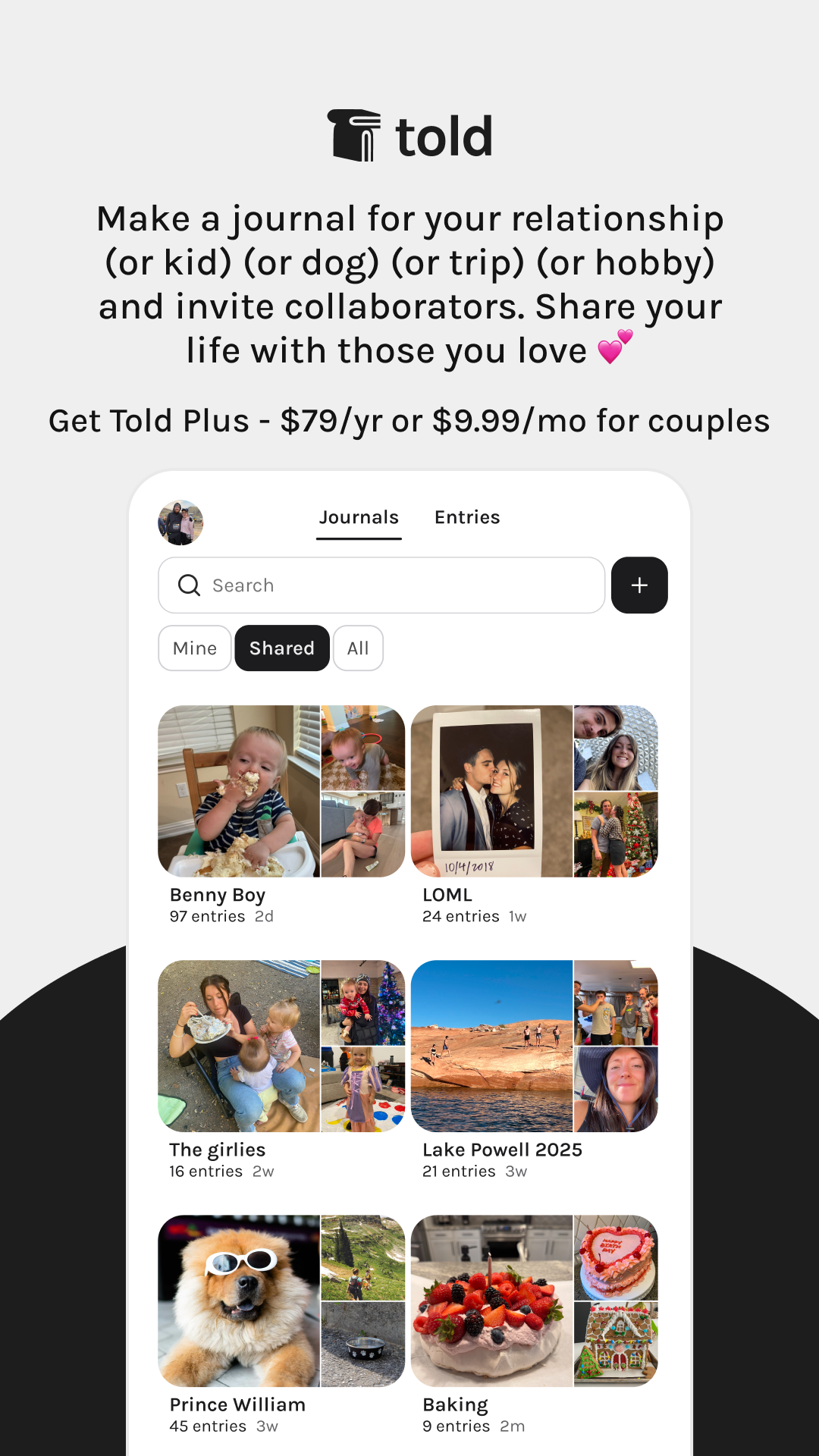
Overall low CPLVP
We achieved CPLPVs from $0.52 - $1.11, outperforming cold-audience benchmarks for a new brand.
Targeting Surprise
Men in the 35–54 age bracket showed "micro-wins" with costs as low as $0.19/LPV, suggesting a major TAM expansion opportunity.
Premium Positioning
Across every segment, higher pricing did NOT reduce engagement. In fact, the higher price points often performed as well or better than the low price points..
The interviews
Qualitative Learnings
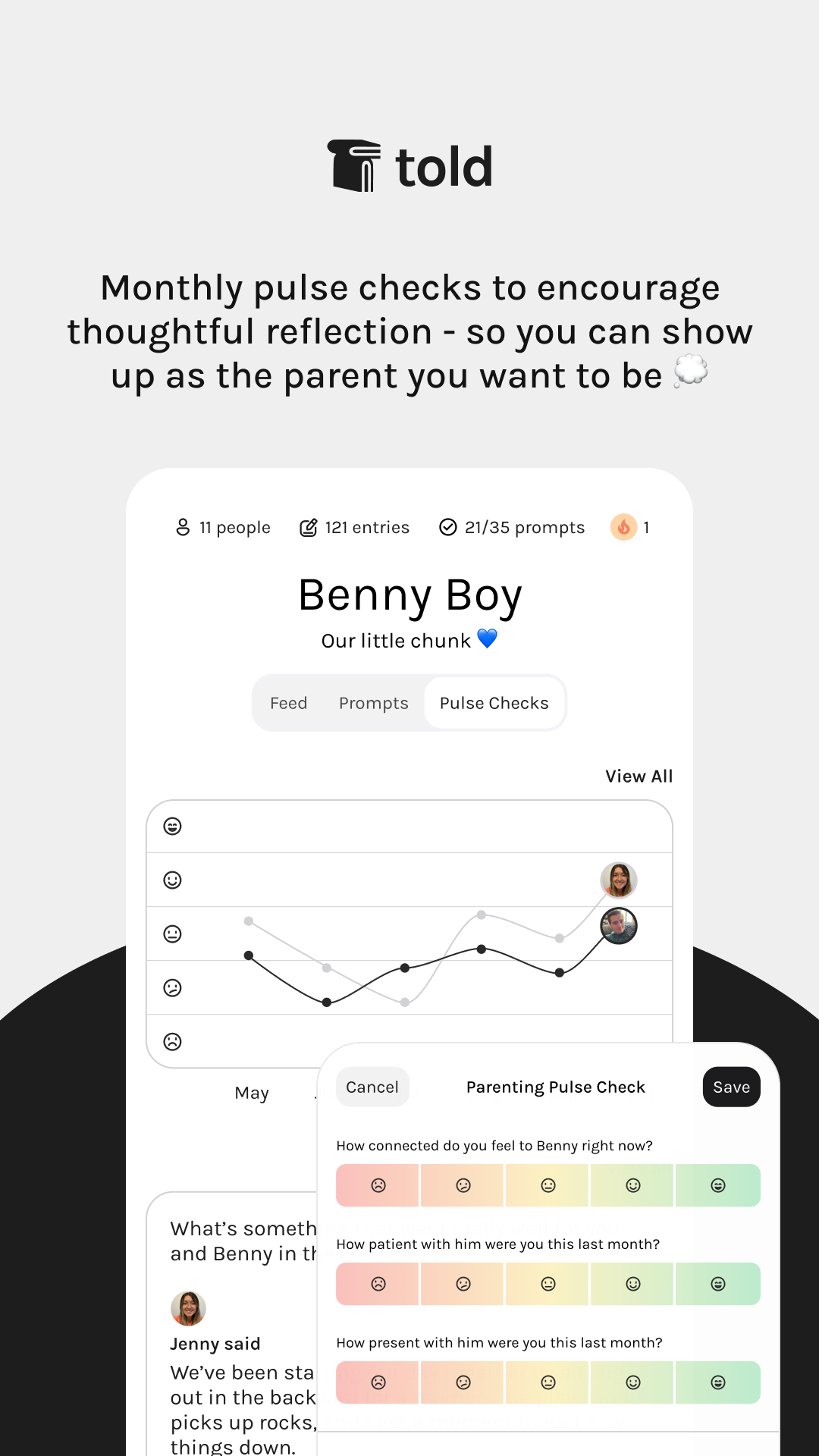
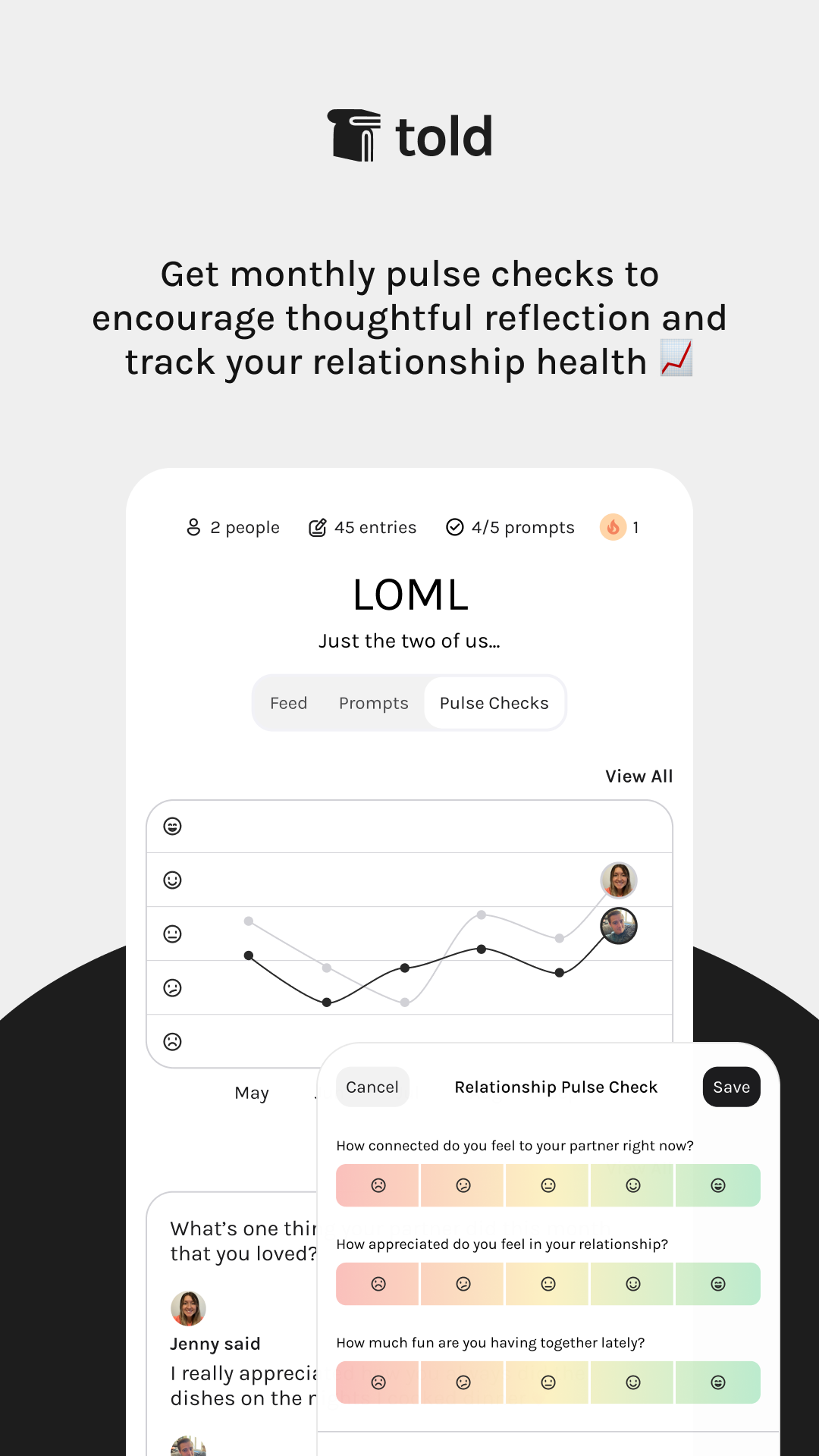
Removing Pulse Checks
My interviewees consistently did not like the pulse check feature - it felt to quantitative and chore like. I cut it out of the MVP plans.
Incentive Opportunity
My interviewees were interested in slideshow/video making features. This prompted new designs for a ‘Spotify Wrapped’ like feature.
Interest in Told as a whole
My interviewees were very interested in the idea of having ALL of their journals/facets of their life in one app, giving me new marketing direction.
Conclusion
A validated roadmap & user behaviors to track
Strategic Takeaways and Next Steps
By applying Lean UX and first-principles thinking, I successfully transitioned Told from an experimental MVP toward a high-conviction paid model. My immediate roadmap includes deep-dive interviews to define the Male Persona—identifying their specific obstacles and needs—while finalizing the Official Paid Plan spec to prioritize the "Wrapped" reward loop over deprioritized relationship surveys.
Paid Plan Metrics to Track
To ensure the paid plan drives real business value, I am moving beyond vanity metrics to track Behavioral Proxies. Firstly, I need to learn if the LPVs can translate into actual subscribers. Within the paid plan features I have several metrics to watch - including prompt completion rate, most used journal types and prompt settings to confirm if our automated journal types are actually providing recurring value to our customer base.